
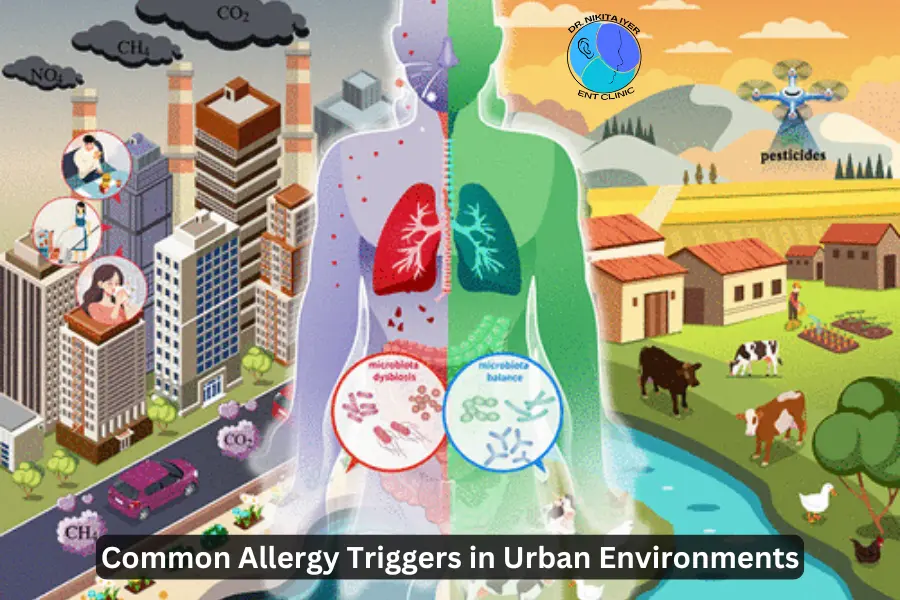
Living in a major city presents its own advantages: the convenience of access, connections between people and places, and the diversity of various cultural events. However, living in a large urban area can also provide people with a significant (and usually hidden) disadvantage: exposure to a virtually endless variety of things that trigger allergic reactions. The air in cities contains a large number of pollutants, allergens, and irritants that can produce several symptoms in the nose, sinuses, throat, skin, and lungs of individuals who have sensitivities to these substances. According to Dr Nikita Iyer, a leading asthma allergy doctor near me, many individuals with allergies may experience persistent sneezing, nasal congestion, sinus pressure, itchy eyes, a sore throat, and numerous infections as a result of constant exposure to these triggers.
Pollution from the air is an example of a common allergen found in urban settings. The four main contributors to air pollution are: vehicle emissions, industrial smokestack emissions, and large amounts of construction dust being released into the atmosphere. These pollutants can also irritate the lining of the nasal passages and the airways. In addition to causing discomfort for individuals, air pollutants may worsen the severity of allergic rhinitis, sinusitis, and even chronic cough. Long-term exposure to air pollutants will cause the nasal mucosa and sinuses to become less able to protect against bacterial and other types of infections.
Inside the home or workplace, indoor allergens are usually more concentrated in an urban environment than in a suburban or rural location. Inside your own home or workplace, there is a greater concentration of dust mites (living in bedding, carpeting, and upholstered furniture), naturally occurring mold (growing in poorly ventilated apartments, bathrooms, and air-conditioning systems), and pet (animal) dander, which can persist in enclosed indoor areas (even if no pets are living in the enclosed area), especially within apartment complexes. Because of the amount of time that people spend inside of their homes and workplaces in a city environment, it is common for individuals to develop year-round symptoms related to indoor allergens, contrary to developing symptoms only during specific times of the year as they would do if they lived in a rural environment.
Pollen is generally viewed as a rural issue, but pollen in cities is often worse than in rural areas. Pollen grains have a greater chance of causing inflammation of the nose and sinuses when they are attached to pollutant particles.
Trees, grass and weeds planted along city streets can cause sinus headaches, stuffy noses and sneezing fits with seasonal weather changes.
Dr Nikita Iyer, the top allergy doctor near me, adds that another possible cause of urban allergic reactions is the increased exposure to chemicals. Fragrances, cleaners, room fresheners, smoke and industrial chemicals can cause irritation in the nose and throat, triggering allergy-like symptoms in individuals without traditional allergies. Irritant exposure may also lead to chronic nasal congestion, post-nasal drip, and/or changes to one’s voice.
If chronic exposure to irritant triggers is not controlled, it can lead to chronic sinusitis, recurrent throat infections, sleep impairment, and a decreased quality of life. These symptoms are often normalised by many people who think “it is just allergies”, when in fact they may need proper evaluation and treatment.
Consult an ENT doctor if you have nasal congestion, sneezing, sinus pain, headache, throat irritation, or recurrent episodes of the same type of infection. Knowing what is causing your problem and treating it earlier can help you avoid serious problems down the road.
Dr Nikita Iyer is a top ENT doctor and allergy specialist near me, who will evaluate and develop a customised treatment plan for your allergy, sinus and upper airway conditions. After receiving the proper diagnosis and treatment, you will find your ability to breathe easier, even if you live in the centre of a city.